 Imagination. Material. Use.
Between art and technology
Imagine clearly.
Make responsibly.
Design joins two forms of intelligence. Imagination proposes a reality that does not yet exist; practical intelligence asks material, tools and use to prove it. We keep both active until form, structure and purpose agree.
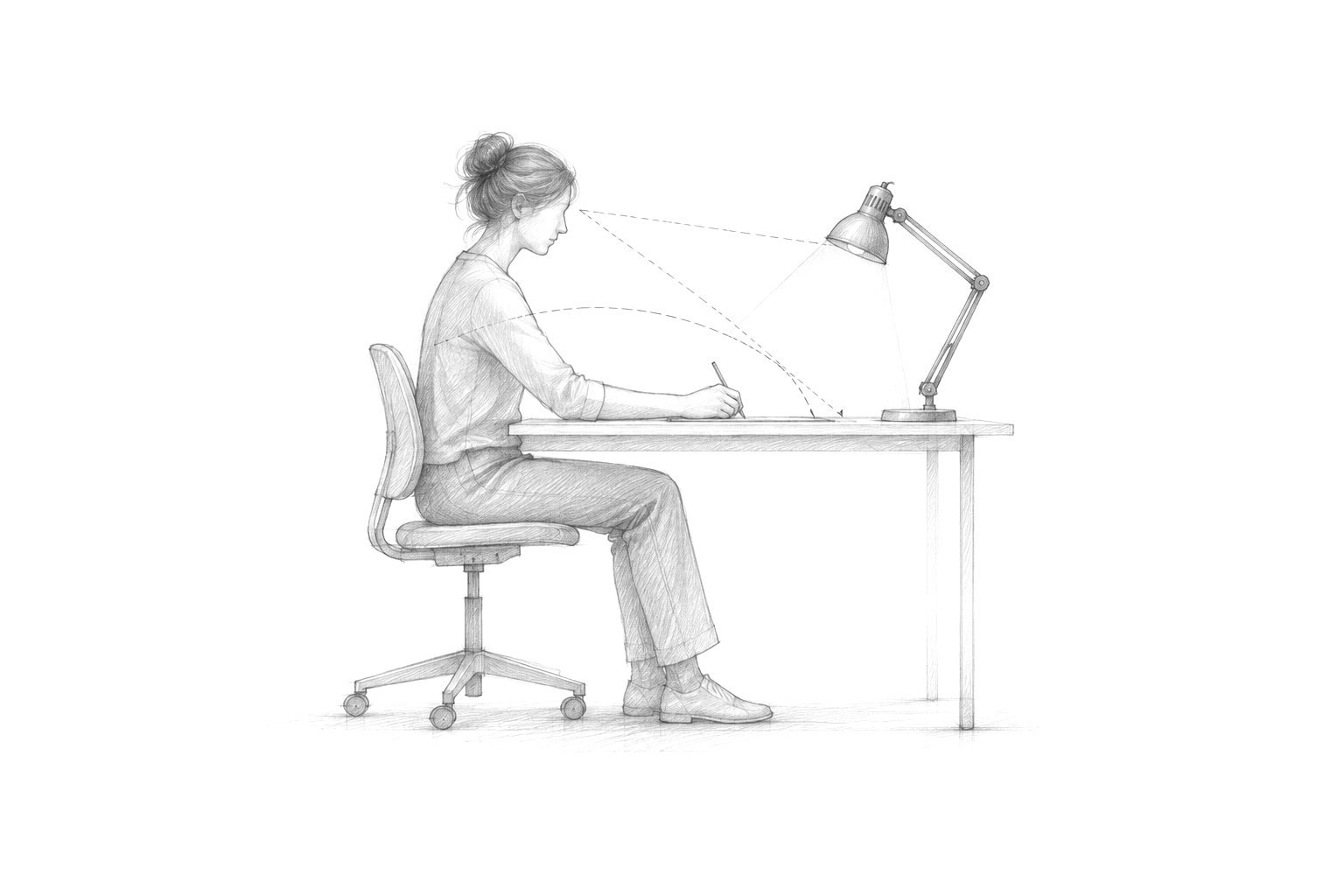
Begin with the need.
Before form, there is a relation: a person, an action and a place. We observe what should become easier, safer, clearer or more useful, because purpose gives the project its measure.
Give the possible a form.
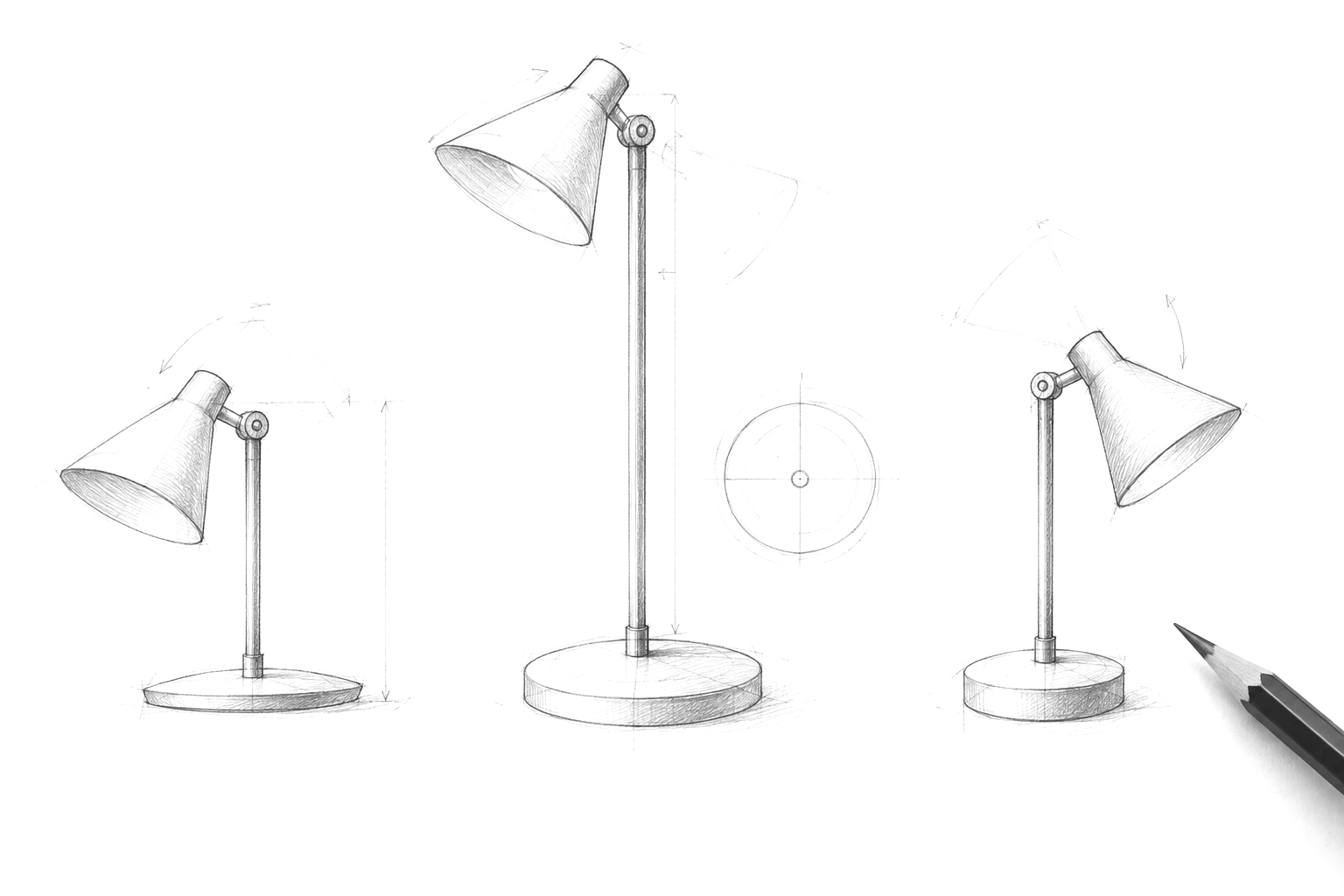
The drawing is an instrument of thought. It gives an imagined reality an order while proportion, movement and alternatives can still be changed without pretending that the object already exists.
Let the model answer.
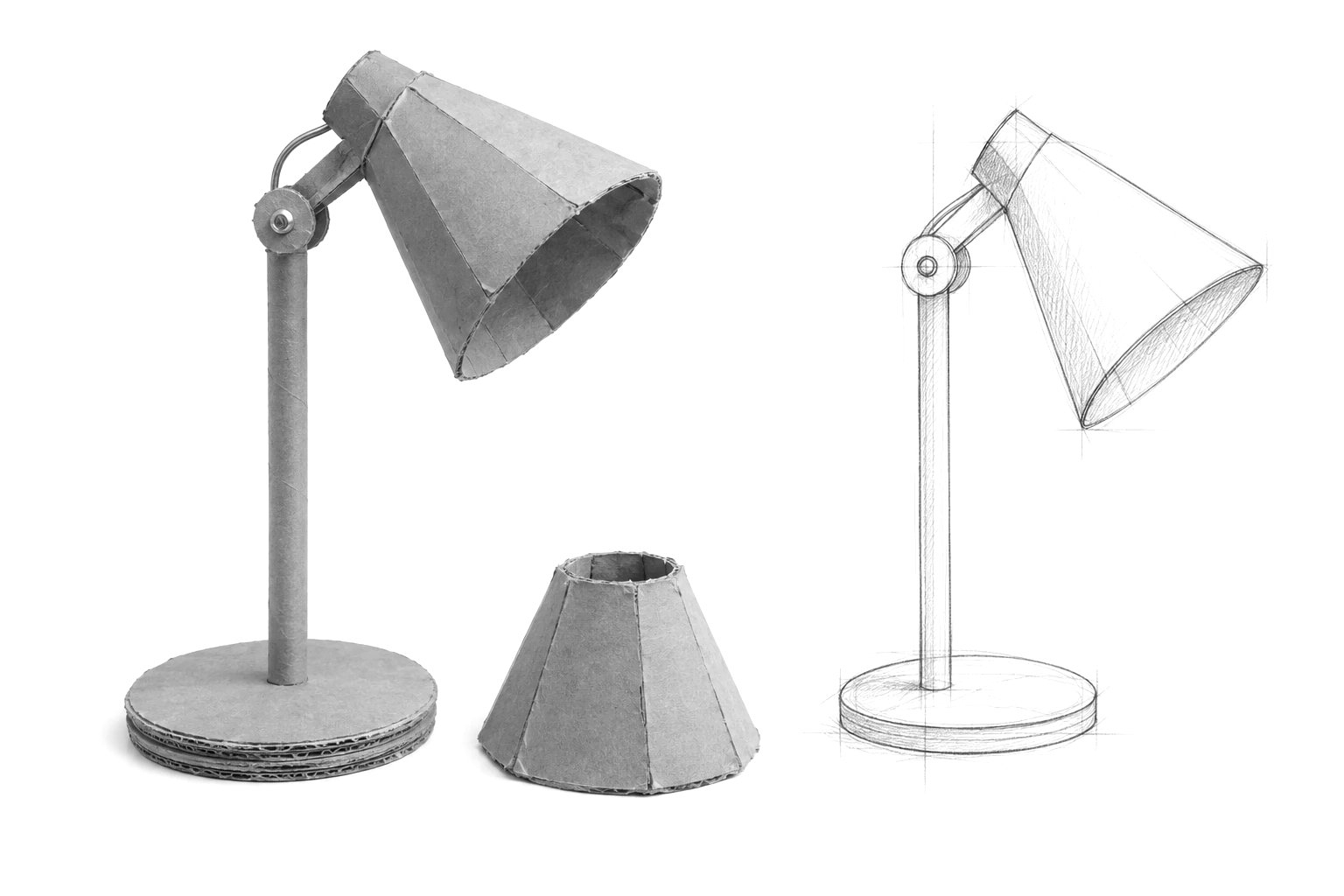
A model does more than illustrate the drawing. It returns information to the idea: proportion changes, surfaces meet, material suggests another direction. Development moves both ways.
Confront it with reality.
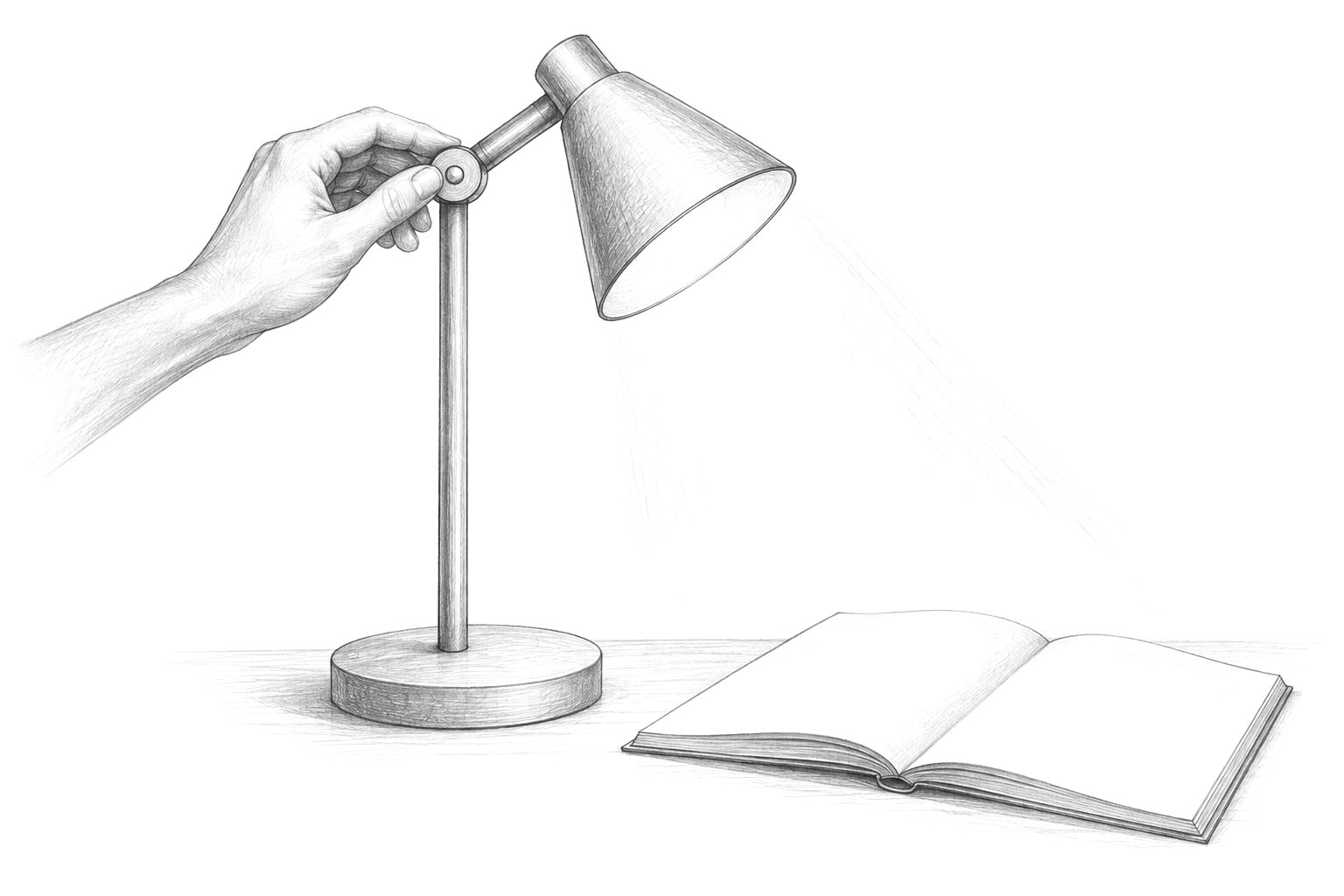
The prototype has a different task: it confronts the proposal with weight, heat, resistance, assembly and use. Only then can the details be resolved for production and the object enter everyday life.
The questions we can take on
Product design / Lighting / Furniture concepts / Mobility studies / Spatial installations